
1 September 2026
Massage chairs for seniors and active athletes: same product, different needs
Older users and athletes need very different things from a massage chair. Here's how to check if a model covers both.
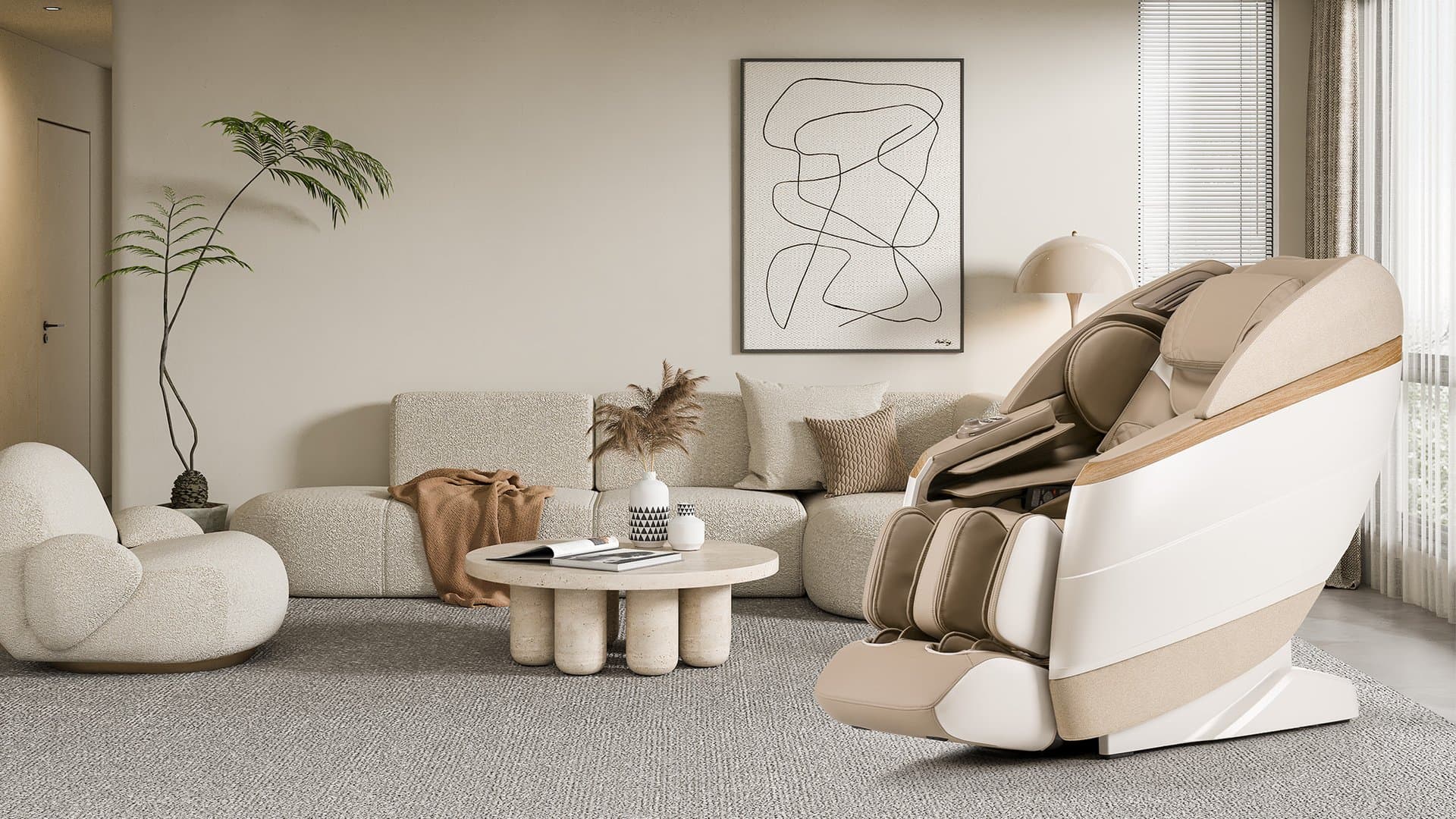
A massage chair isn't a one-size-fits-all device. An older user with sensitive joints and an athlete recovering after training need very different things from the same machine, even if it's the exact same model sitting in the living room. The difference isn't about whether a chair is "good" or "bad". It's about whether it has enough range to handle two opposite needs: gentle relaxation on one end, and intense muscle recovery on the other.
Why age and activity level matter
When you're shopping for a massage chair at home, it's easy to focus on the features sellers talk about most: number of massage techniques, rail length, air cushions. It's less common to ask who will actually use the chair, and what condition their body is usually in.
Older users often have thinner skin, less padding in certain areas, and sometimes osteoporosis or sensitive joints. Their body needs lower intensity, a slower rhythm, and above all, the ability to stop or ease off the massage instantly at any point. Someone who trains hard has the opposite need. Muscles are tired, sometimes sore from lactic acid buildup, and effective relief requires deeper pressure and longer treatment of specific areas like the thighs or shoulder girdle.
If a chair doesn't cover that whole range, you end up buying something too intense for one user and not enough for the other. This is one of the most common mistakes when buying for a multi-generational household, where an older parent and an active adult child share the same chair.
What older users actually need
For older users, gradual adjustment matters most. A good massage chair lets you start at the lowest intensity and nudge it up slowly, instead of forcing an immediate choice between "gentle" and "strong" with nothing in between.
Ease of use matters just as much. If the remote is packed with submenus and settings, an older person might never actually learn to use it alone, and the chair ends up sitting unused in the corner. Physical buttons, a clear display, and simple programs with plain names (relax, sleep, gentle back massage) often matter more to this group than the sheer number of available techniques.
The Zero Gravity position tends to be genuinely useful for older users, since it takes pressure off the spine and joints and reduces load on the lower body. But the transition into that position needs to be smooth and controlled, not abrupt, because sudden movement can be uncomfortable for someone with limited mobility.
Leg and foot massage is often more important for older users than intense back work, mainly because of common circulation issues in the lower limbs. When choosing a chair, it's worth checking how good and adjustable this function actually is, not just focusing on upper body massage.
What an active athlete actually needs
Someone training regularly or competing has different priorities. Depth of massage matters a lot here: can the rail and rollers reach enough intensity to actually be felt through more muscle mass? Some basic 2D models simply can't deliver that. For more demanding users, chairs with 3D or 4D mechanisms tend to work better, offering deeper, more targeted pressure and variable rhythm that feels closer to a therapist's hands.
Body coverage matters too. Active people often need thorough work on the thighs, calves, and shoulder girdle, areas that basic models sometimes cover less thoroughly than the back. It's worth checking whether the chair has solid air-compression leg massage that can mimic the squeezing sensation used to help muscles recover after intense exercise.
Athletes also often benefit from combining heat with massage, since warming the muscles before or during treatment helps tense fibers release more easily. Infrared heat in the lower back area tends to be a more sought-after feature for this group than for older users, who might find the room temperature alone sufficient.
Where the needs overlap
Despite the differences, some elements benefit both groups. Adjustable intensity is one of them, since both an older user and an athlete benefit from precise control, just pulling the dial in opposite directions. The same goes for program length, since one person wants a quick ten-minute relaxation session and another wants a longer thirty-minute recovery session after training.
Build quality of the seat and upholstery matters too. All HEKO and iRest models are upholstered in synthetic leather, chosen specifically for its durability and easy maintenance, since it needs to withstand frequent, intense use in a household where several generations share the same chair with very different habits.
How to check if a chair fits both users
The best way is to test the chair in person, ideally with both users present. You can check the list of locations where you can see and try the models yourself before deciding. During the test, it's worth checking both the lowest and highest intensity settings, seeing how easy the controls are for an older person, and judging whether the deep-tissue massage is strong enough for more demanding muscle groups.
If you're not sure which model would best cover your household's needs, it's worth asking for advice rather than guessing from a spec sheet. Through the inquiry form you can describe who will use the chair and for what purpose, and we'll help you find a model that genuinely covers the range from gentle relaxation to intense athletic recovery. You can also browse the full lineup on the chairs page.
The right choice isn't the one with the most features listed on paper. It's the one that actually fits the people who'll be using it at home, every day.
The HEKO team
Would you like advice?
We help you pick the right model for your needs, height and space. Advice with no obligation.
More from the blog
SL track and airbags: what really determines massage quality
The track shape and airbag layout affect massage quality more than the number of programs. Here's why it matters.
Massage chair vs. massage recliner: what's the difference and which one to pick
A massage recliner and a massage chair aren't the same thing. Here's the real difference in tech, price and experience.